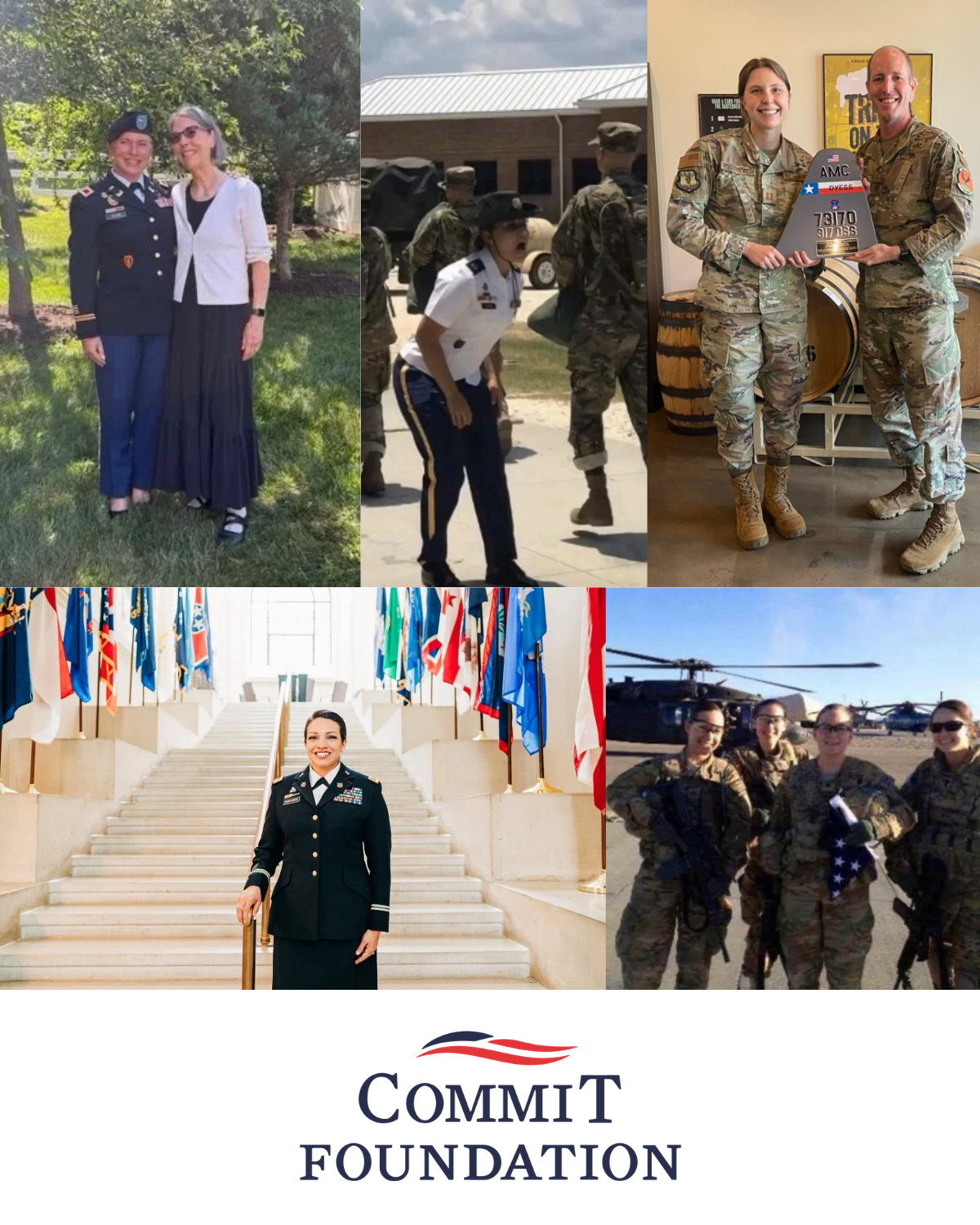
By Lindsay Cashin, SVP of Strategic Partnerships & Advancement, The COMMIT Foundation – Every year on June 12, we recognize Women Veterans Recognition Day and honor the generations of women who have served our nation with courage, commitment, and leadership.
It is a day to celebrate military service, but it is also an opportunity to recognize something equally important: women veterans continue to lead long after they transition from military service.
Across every branch of service, women have led teams, solved complex challenges, supported their communities, and served alongside their fellow service members in times of peace and conflict. Their contributions have strengthened our military and helped shape the future of our nation. Their legacy continues to grow as more women serve, lead, and redefine what military leadership looks like for future generations.
Yet military service is only one chapter of their story.
Today, women veterans continue to lead in boardrooms, classrooms, hospitals, businesses, nonprofits, government agencies, and communities across the country. They bring with them leadership experiences forged through uncertainty, responsibility, adaptability, and service. Whether leading organizations, supporting military families, mentoring others, or building stronger communities, their impact continues long after they leave uniform.
At The COMMIT Foundation, we have the privilege of supporting women veterans as they navigate life beyond military service. Through workshops, coaching, mentorship, and a lifelong community of support, we help military-connected leaders gain clarity, strengthen connections, and pursue lives aligned with their values, strengths, and purpose.
Few things are more inspiring than witnessing the diversity of experiences represented within the women we serve. The women in the COMMIT community have flown aircraft, gathered intelligence, advised senior leaders, supported Special Operations missions, provided critical medical care, argued cases as military attorneys, led global logistics operations, and trained the next generation of service members. Their experiences are diverse, but each reflects a commitment to service, leadership, and impact that continues long after military service ends.
While every transition journey is unique, one truth remains constant: connection, mentorship, and community can play a powerful role in helping people navigate what comes next. The relationships that support service members during military service often remain just as important as they move into their next chapter. Connection creates opportunities, provides perspective, and reminds individuals that they do not have to navigate change on their own.
One of the greatest privileges of this work is witnessing the moment when women veterans recognize the full value of their experiences. Not simply the positions they held or the responsibilities they carried, but the leadership, resilience, perspective, and strength they developed along the way. More often than not, that realization is not about discovering something new. It is about recognizing something that was already there.
That recognition matters.
Because the ability to navigate uncertainty, build trust, adapt to change, and lead through complexity does not disappear when military service ends. Those strengths continue to shape how women veterans contribute to their families, workplaces, communities, and the people they influence every day.
Every day, women veterans are building businesses, leading organizations, mentoring others, advocating for military families, serving their communities, and creating opportunities for those who follow behind them.
Their service did not end when they left the military.
It evolved.
This Women Veterans Recognition Day, we celebrate the leadership, resilience, and impact of women veterans everywhere. We thank them for their service, honor their contributions, and recognize the countless ways they continue to lead in their next chapter.
Because leadership does not end with military service.